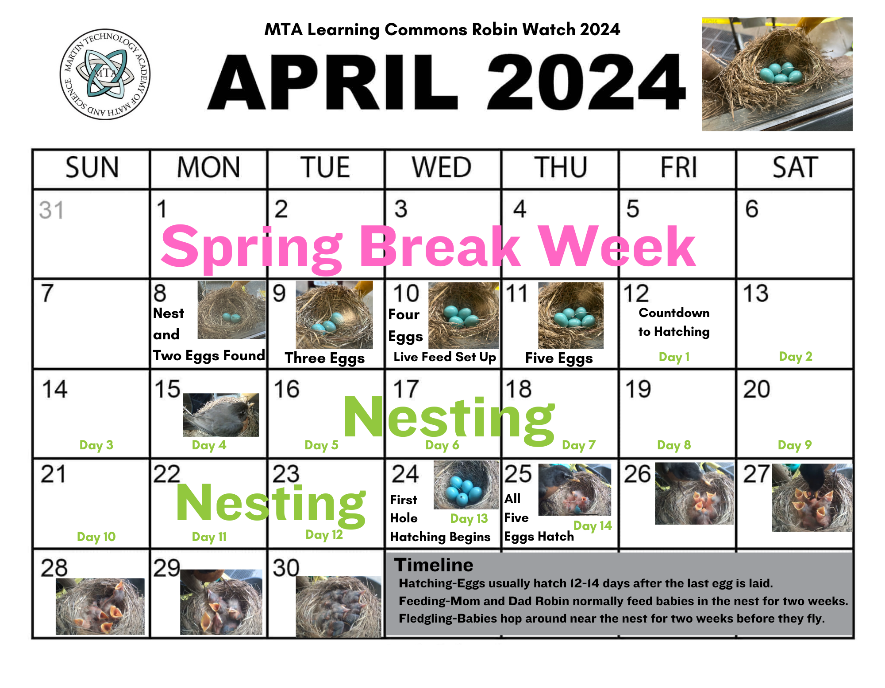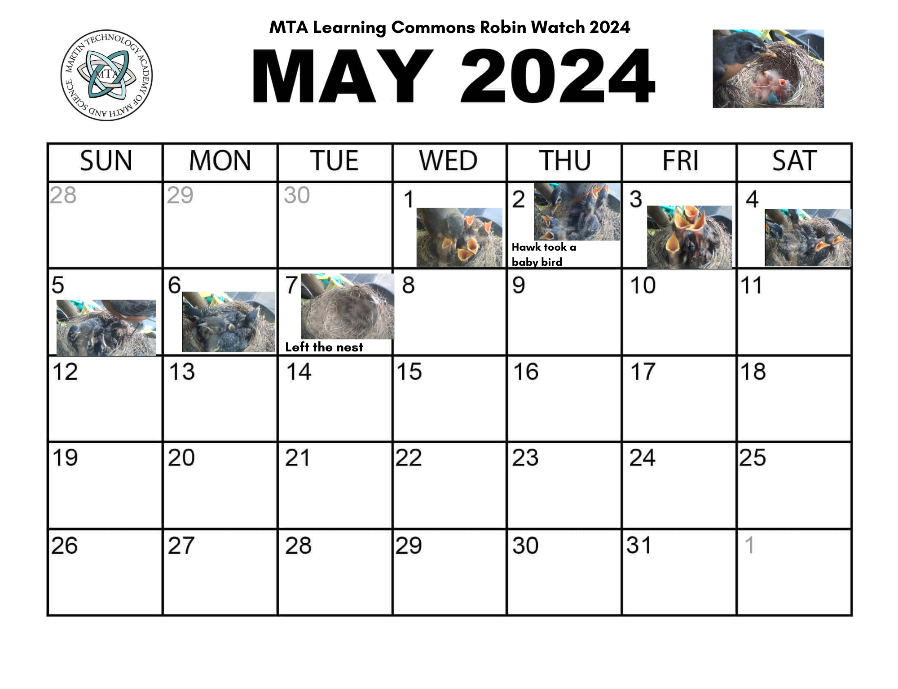



In April 2024, a robin’s nest was discovered in a perfect spot for observation on a ledge right outside my learning commons. My initial excitement quickly turned to wonder, and I was determined to capture nature’s show for our community to see. In my 25+ years as a media specialist, I have learned that capturing interest and the hearts of students is key. You can have a strong instructional design, but if students are not invested, you have nothing. I knew this authentic experience had the possibility for great impact, and I was determined to engage our students.
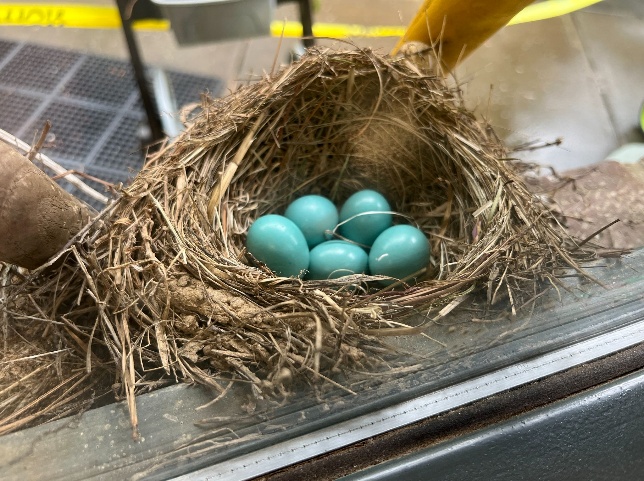
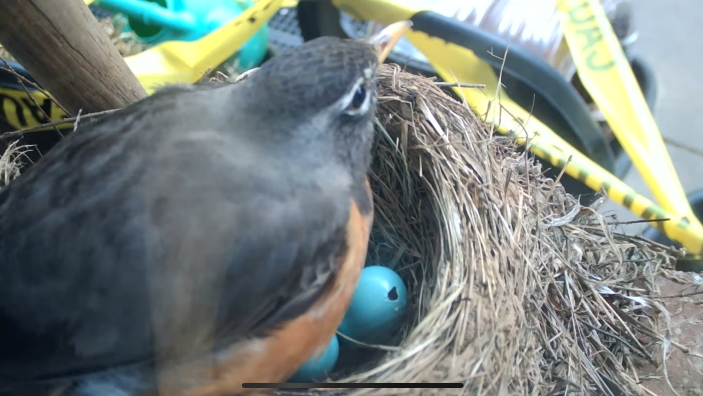
My librarian’s sense of inquiry led me to an immediate search through all my cabinets to find a webcam to begin a live feed of the nest for our community. In our first week of observation, we watched a nest of three eggs become five, and we noticed lots of interesting behaviors from mama and daddy robin. I received texts such as, “Daddy is delivering Uber Eats!”
I think it is important to model to students that I am a learner, too. I had never done a live feed. I had lots of questions and zero expertise. This was an inquiry project for me, too. Not only was I learning about robins, but I was learning the nuance of streaming and seeking ways to extend the learning of my students and staff at every turn.
Building Community
One of the first things I did to engage students and families was to create a Google Form and request naming suggestions for the birds. Martin (our school’s name) and Marlene were the winners.
In addition to our school community watching the nest around the clock, other schools in our district were mesmerized by this live action as well.
Nesting and Hatching
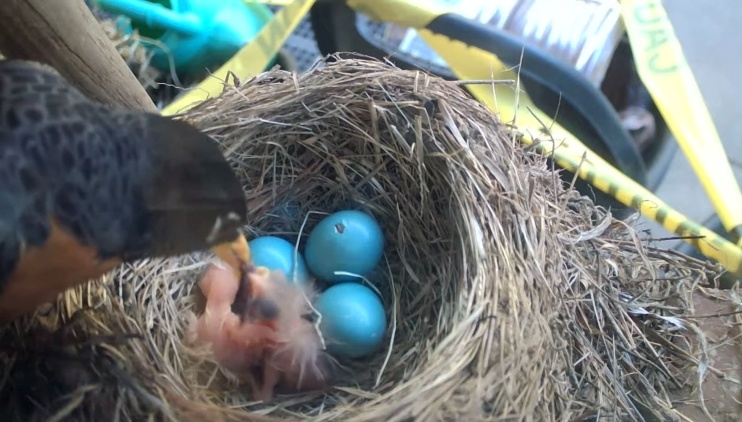
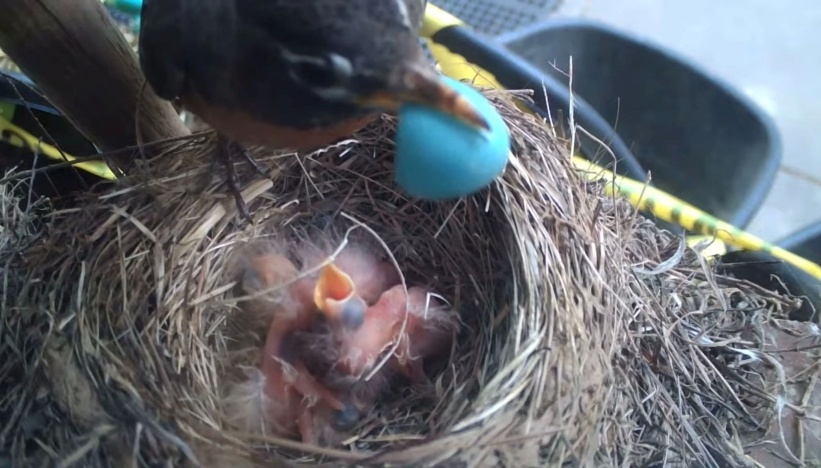
During the nesting there were lots of moments of worry. Some nights the live feed dropped and panic ensued! More than once the mama bird made her presence very scarce, and we were afraid she was abandoning the nest. After one long weekend, there was a collective sigh of relief when the mama bird returned. Soon after this return, a student noticed the first hole in an egg. That evening I started receiving texts that the miracle was unfolding. Within the next 24 hours, all five eggs hatched. All of the footage was recorded, and I was able to create videos to share.
Greatest Discoveries
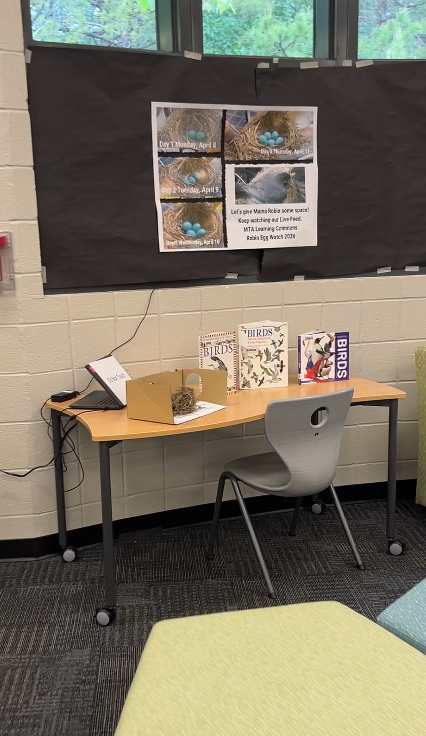
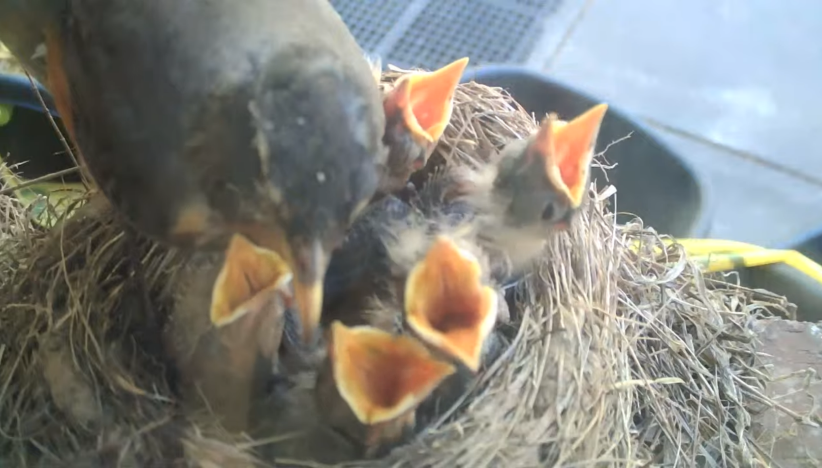
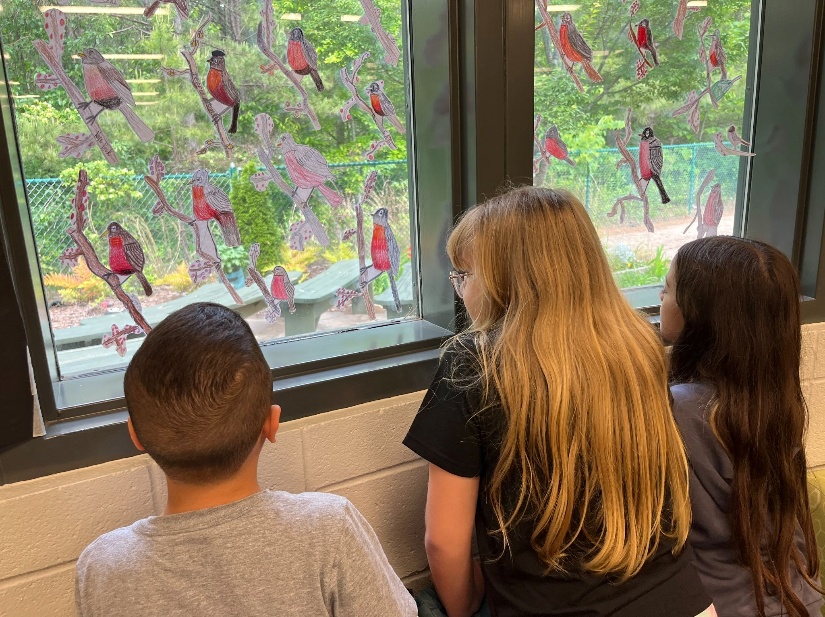
I set up a research station in the learning commons, led directed drawings of robins, and created graphic organizers for students to collect data. Students loved watching how quickly the baby birds changed and grew. The fight for food in the nest was fascinating for them to watch, but the parents cleaning the nest so quickly and eating all the poop might have been their favorite observation.
Nature’s Realities
One evening a colleague texted me in a panic saying there were only four baby birds in the nest. After analyzing the footage, I determined a Cooper’s hawk scooped up one of the baby birds. Our community was on edge as we rooted for these birds to fly. We kept a close eye on the nest and pretended that we could somehow protect these remaining baby birds.
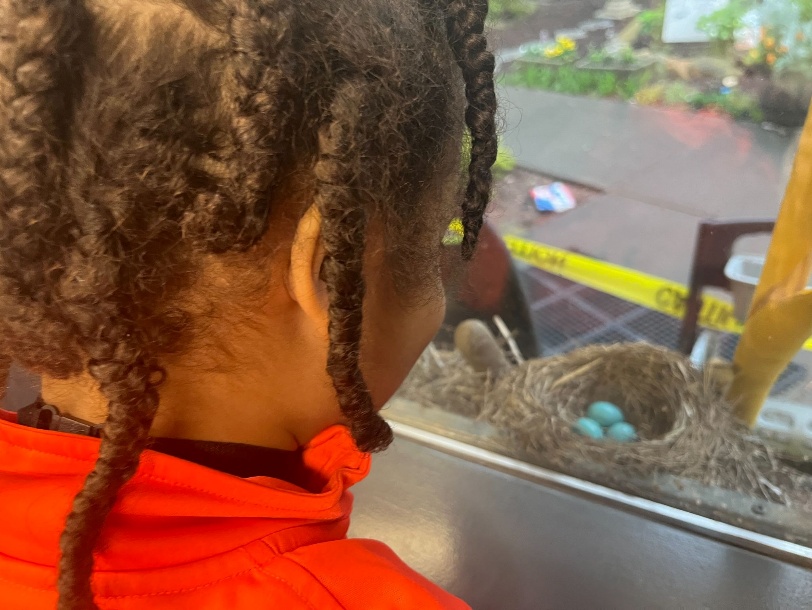
In a picture-perfect moment, I cracked the door to get a glimpse of the nest one day, and the babies flew away one-by-one from the nest. A small group of students who just happened to be visiting the learning commons watched in awe from our windows. “We were so lucky!” one of my students exclaimed as I walked back inside after witnessing the story come full circle.
Ask the Expert
After the birds left the nest, our hearts were still longing for more. In a quest to help answer some of the lingering questions students had, I remembered advice guest author Lola Schaefer once gave me. She told me to look for academic articles on topics and then reach out to those experts to share their expertise with children.
Following that advice led me to find expert Robert S. Mulvihill, the National Aviary’s ornithologist. I e-mailed Mulvihill, and he graciously agreed to do two separate Zoom sessions with our students. They had SO many questions! Here is a sampling of their curiosity:
- Do the birds ever come back after they leave the nest?
- How do the birds know how to fly for the first time?
- Do the mamas actually eat the poop or just fly away with it and spit it out?
- How do the birds know when it’s time to come out of the nest?
- Why do robins lay blue eggs?
Mulvilhill provided a wealth of information for our students, and he also reminded us that kids usually ask the best questions.
Citizen Scientist
Mulvihill let us know that the article I found was actually one he co-wrote with a citizen scientist. Someone reached out to him after noticing a robin sharing a nest with another bird. He let the woman know what she was observing was indeed an extraordinary story that should be shared. He encouraged her to capture the story, and then he wrote the article with her.
His message to students was that they are citizen scientists, and he encouraged them to notice the world around them and notate their findings. He praised students for their work as citizen scientists observing the robins.
Takeaways
My takeaways from this journey were that yes, there are many things that we can orchestrate and set up to teach our students. However, often the most meaningful learning happens when we seize the moments happening in the world in front of us.