


Today, anyone with a microphone and an internet connection can broadcast an opinion. But creating something worth listening to takes more than having something to say. It requires research, credible evidence, and an understanding of how to engage an audience. And what better way for students to understand what makes content worth listening to than to experience the creative process themselves?
Creating podcasts turns students from consumers of media into creators, putting familiar literacy skills to work in new ways. Whether used as a classroom project or an alternative assessment, podcasting challenges students to research, organize their ideas, and write with an audience in mind, all while finding their own voice.
And podcasting isn’t just for the language arts classroom. Across subjects, students can use the medium to explore questions, demonstrate understanding, and share what they’ve learned. This guide offers practical strategies and resources to take students from an initial idea to a finished 5–7-minute podcast episode.

Step 1: Planning the Podcast
Long before pressing record, students need to establish a topic and an objective to provide direction throughout the process.
Choosing a Topic
To sustain motivation, it’s important to strike a balance between student voice with curriculum objectives. The three approaches below provide examples of how this can be achieved across subject areas.
Curriculum-Specific Topics High Teacher Control | Low Student Choice
Topic or guiding question tied to instruction
- Science (Biology): How does the immune system protect us, and what happens when it doesn’t work as expected?
- History: What stories are often overlooked when studying the American Civil Rights Movement?
- English: Pick two characters from books we’ve read this term. What would they agree or disagree about?
Theme-Based Topics Moderate Teacher Control | Moderate Student Choice
Curriculum-relevant theme open to varied topics
- Science: Energy (renewables, athletic performance, climate impact)
- History: Revolutions (political, industrial, digital, social)
- English: Self-discovery (identity, coming of age, personal narrative)
Open-Ended Topics Low Teacher Control | High Student Choice
Student choice driven by interests, experiences, or questions. The New York Times’ 1,000+ Writing Prompts for Students offers ideas that work just as well for podcasting.
- How does food shape your family gatherings?
- What’s the best way to plan a vacation?
- What’s your biggest failure, and what did you learn?
Establishing an Objective
After selecting a topic, students should identify an objective to guide their research and writing. Educators can turn this step into a discussion of which objectives suit different topics and why. For example, curriculum-specific podcasts may emphasize informing or persuading, while theme-based and open-ended episodes lend themselves to exploring, entertaining, or reflecting.
Five Podcast Objectives
- Inform: Explain a concept or introduce new information.
- Persuade: Present an argument or advocate for a point of view.
- Explore: Investigate a question or examine multiple perspectives.
- Entertain: Tell a story or engage listeners through creative expression.
- Reflect: Share personal experiences or examine lessons learned.

Step 2: Developing the Podcast
With a topic and objective established, students can begin developing their episode by choosing a format, organizing their content, and developing a script. The bulk of the academic work happens during this stage, so consider breaking the tasks into smaller assignments to support students and provide feedback.
Format & Organization
When it comes to formatting and organizing an episode, I recommend offering students two distinct approaches: Narration & Storytelling and Interview with Commentary. This stage also presents an opportunity to discuss which format best supports their objective chosen in Step 1. Providing scaffolding (below) will prevent learners from becoming overwhelmed by choice during the writing process.
Option 1: Narration & Storytelling
Best suited to inform, entertain, or reflect, this format relies on a strong central voice to guide listeners through a story or personal experience. Suggested episode structure:
Section |
Purpose |
Time |
| Hook | Capture Attention | 30-45 sec |
| Set-Up/Context | Intro topic/central question & why it’s relevant/important | 45-75 sec |
| Segment 1 | First major idea/part of the story | 60-100 sec |
| Segment 2 | Second major idea/part of the story | 60-100 sec |
| Turning/Insight | “Aha” moment, important take away | 30-60 sec |
| Reflection/Closing | Process meaning, wrap up loose ends | 30-45 sec |
Option 2: Interview with Commentary
Best suited to explore, persuade, or inform, this format incorporates interviews alongside a host’s commentary to introduce multiple perspectives or examine competing ideas. Suggested episode structure:
Stage |
Description |
Time |
| Hook | Capture Attention | 30-45 sec |
| Set-Up/Context | Intro topic, why it’s relevant/important, provide preview | 45-75 sec |
| Interview Clip 1 | Introduce a perspective, story, or piece of evidence | 60-100 sec |
| Commentary | Help listeners process interview 1, guide to next idea | 30-45 sec |
| Interview Clip 2 | Add another voice, deepen understanding, add contrast | 60-100 sec |
| Reflection/Analysis | Highlight discoveries, patterns, implications | 30-45 sec |
| Closing | Reinforce takeaway, or final thought for listener | 20-45 sec |
Evidence & Writing
With a format and structure in place, students should begin gathering evidence to support their ideas and start writing a script.
Gathering Evidence
All podcasts should be grounded in relevant evidence. This step creates an opportunity to explore with students how different types of evidence lend credibility to different topics and objectives. Forms of evidence may include:
- Textual: Quotations from books, articles, or classroom texts
- Research: Statistics, studies, and credible published sources
- Human: Interviews, surveys, and firsthand accounts
- Experiential: Personal experiences and observations
- Media: Audio clips, news reports, or historical recordings
Writing for the Ear
Unlike traditional essays, podcast scripts are meant to be heard. Encourage students to write in more conversational language while using clear transitions to keep listeners engaged and well-oriented.
Students should fully script Narration & Storytelling episodes and most of an Interview with Commentary episode, leaving room for natural conversation during interviews. For these segments, learners should prepare open-ended questions rather than scripted dialogue.
A 5-7 min episode will be around 650-100 words, though pacing will vary depending on the format.

Step 3: Producing the Podcast
With research and scripts complete, students are ready to bring their podcasts to life through recording and editing, sound design, and cover art.
Recording & Editing
Podcasts can be recorded using tools like a smartphone or iPad to professional-grade microphones and audio mixers. For editing, consider using free tools such as GarageBand, free with Apple devices; Audacity, open-source audio editor for computers; or Canva, already available in many schools. There are plenty of tutorials on YouTube to help guide you and your students through the most technical stage of the process.
Sound Design
Thoughtful sound design is what creates an immersive listening experience. This presents an opportunity for teachers to explore tone and mood with students, examining how audio choices impact the audience. Encourage students to experiment with:
- Intro/Outro Music: Establish a consistent tone and give the episode a recognizable beginning and ending.
- Ambient Sound: Use environmental sounds to establish a setting or immerse listeners in a scene.
- Vocal Pauses: Create emphasis, build anticipation, or give listeners time to reflect.
- Transitions: Use music or sound effects to signal a shift between segments or ideas.
For royalty-free music and sound effects, students can explore resources like Pixabay, Free Music Archive, and Incompetech.
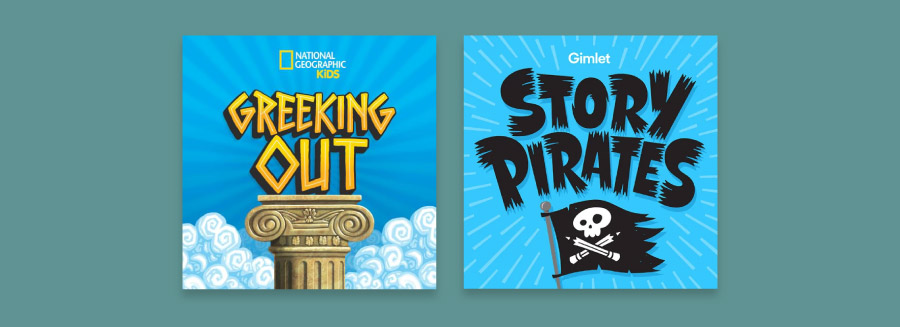
Cover Art
Cover art offers listeners a first impression of a podcast’s content and tone. Have students explore existing podcast covers, considering how visual design can communicate ideas through literal or metaphorical imagery, before creating their own art using digital tools like Canva or by hand.
Podcasts may feel like a uniquely modern medium, but creating them draws on a wide range of familiar, essential skills: reading, writing, researching, speaking, listening, and creative thinking. I believe that podcasting is especially valuable as it allows students to apply these abilities in new ways. Not only does this challenge confident learners to stretch beyond their comfort zones, but it also gives students who struggle with traditional assignments and assessments a chance to shine.
Therefore, consider trading the traditional essay or presentation for a podcast. Focus your evaluation on the quality of students’ research, organization, communication, and ability to achieve their stated objective rather than the polish of the final recording. You might be surprised by what your students have to say.
For additional inspiration and resources, explore The New York Times’ Student Podcast Contest and NPR’s Student Podcast Challenge. Both offer examples from past winners, which can serve as mentor texts, and resources to guide educators and students through the podcasting process. You might even consider aligning your assignment with a contest’s guidelines, giving students the added motivation of an opportunity to share their work with an audience beyond the classroom.